
“yup that’s me, you probably wonder how I got here” ?
Enguerran Belles, Application & technical support engineer at Imagine Optic
Following the release of Ciel & Espace n° 605 last February, we’re shining a spotlight on Enguerran Belles, our application engineer who supported the testing of telescope mirror quality with OEC®’s R-FLEX wavefront sensing solution.
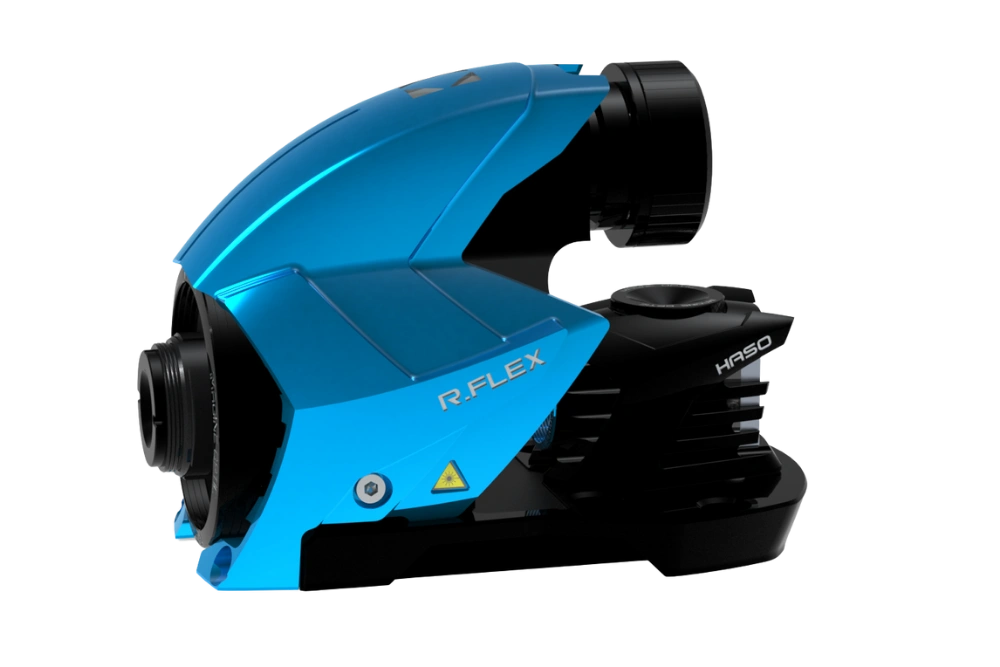
What is the OEC®?
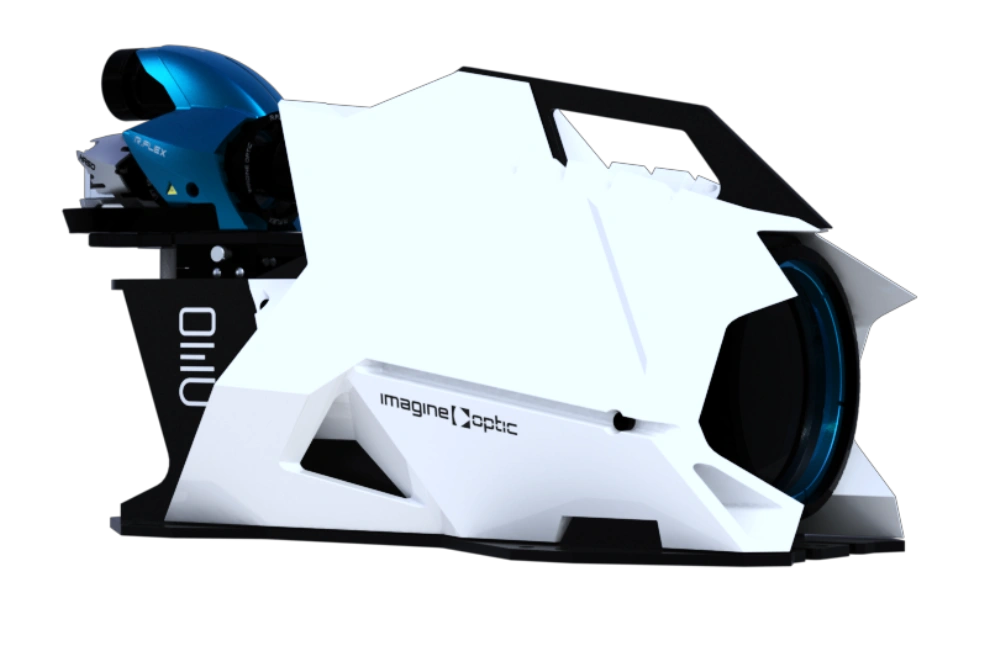
The OEC®, which stands for Optical Engineer Companion is a line of ready-to-use plug-in modules that allow you to set any testing configuration needed to characterize your optical components or systems. It features a self-aligning illumination system on a wavefront sensor, while allowing you to adjust the test beam diameter and aperture. Versatile and upgradable, the Optical Engineer Companion adapts to the daily needs of the optical metrology lab.
How the OEC® can support telescope mirror quality measurement?
The Optical Engineer Companion can be used for the direct concave mirror characterization, or for complete telescope characterization.
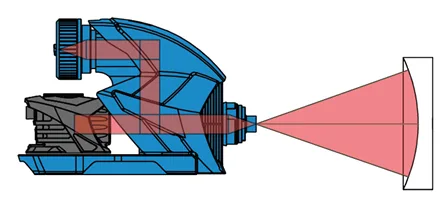
OEC’s R-FLEX illumination platform set for reflection measurement on concave mirror
Live measurements provided by Shack Hartmann wavefront sensing or LIFT wavefront sensing also enable dynamic alignment of telescope’s components or collimation.
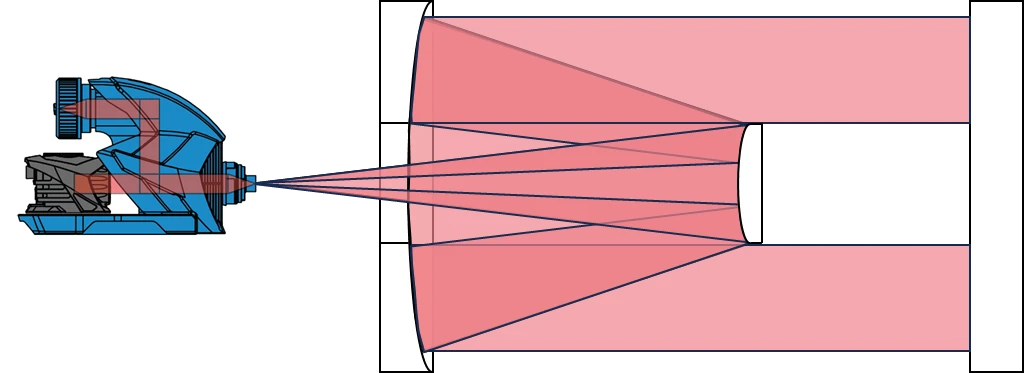
OEC’s R-FLEX illumination platform set for telescope characterization and/or alignment in double pass configuration thanks to a flat reference mirror
Thanks to its compact and lightweight design, the R-FLEX can be easily mounted at the focal plane of the telescope. For more advanced environmental testing, such as that involving vacuum thermal chamber for example, this greatly simplifies the optical alignment of the R-FLEX with the fixed telescope located inside the chamber -rather than the reverse, as is sometimes necessary with Fizeau interferometer-type solutions.
Sevunscope CORE 250 f/4 telescope mirror quality measurement
The telescope under test is a Newtonian, meaning it consists of a concave primary mirror that focuses light onto a plane secondary mirror having the particularity of being placed at 45° and reflecting light toward the side of the telescope tube.
The R-FLEX is placed at the focal plane of the telescope, perpendicular to it, and is equipped with a plug-in focusing module selected from our catalog to match the telescope’s aperture. The test configuration is known as a “double pass” setup, meaning that the light emitted from the R-FLEX is collimated by the telescope, reflected by a flat reference mirror -of high optical quality- back to the telescope, which then focuses it onto the R-FLEX from which it originated.
At this point, it is then analyzed by the Shack-Hartmann wavefront sensor which equips the R-FLEX. All Imagine Optic’s sensors are factory-calibrated to allow for an absolute measurement of the wavefront error of the device under test.
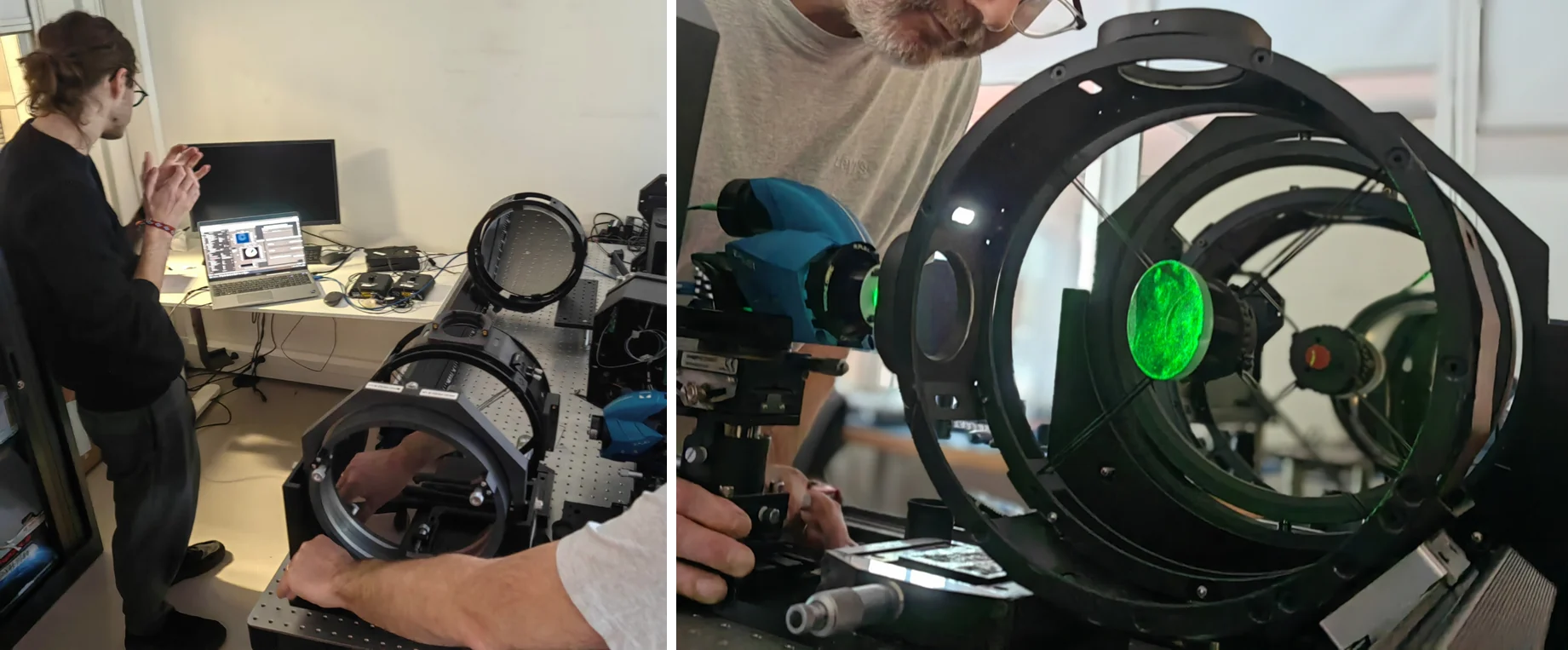
Setting up of the OEC’s R-FLEX on the Sevunscope CORE 250 f/4 telescope at Imagine Optic metrology lab
Consult paper from Jean Luc Dauvergne in Ciel&Espace n°605 February/March to read more about the telescope mirror quality measurement.
Meet the author: Enguerran Belles short CV
My name is Enguerran, and I’m a photonics and optics engineer. I studied at Télécom Physique Strasbourg -including a semester abroad at Polytechnique Montréal- during which I gained my first experience in nonlinear optics and quantum physics—both theoretical and highly experimental. That experience helped me realize my passion for experimental physics. For me, studying a phenomenon from its theoretical foundations all the way through to the analysis of measurements is truly the best part of optics.
Today, as an application engineer and technical support coordinator at Imagine Optic, I get to fully immerse myself in experimental work by performing a wide variety of measurements—ranging from assessing the surface quality of mirrors at the nanometer scale to measuring chromatic aberration in astronomical eyepieces!
We love to collaborate with our customers and help them get the most of their applications. We are happy to discuss how our optical metrology solutions such as the OEC® suit your needs. Reach us at sales@imagine-optic.com or through the contact form.
What is a Newtonian telescope?
Newtonian telescope, or Newtonian reflector, is an optical configuration in which a concave primary mirror focuses light toward a flat secondary mirror mounted diagonally. It was proposed by Sir Isaac Newton himself -hence its name- and is popular today among amateurs, as it is generally less expensive than telescopes of comparable diameter -since there is only one complex surface to be polished.
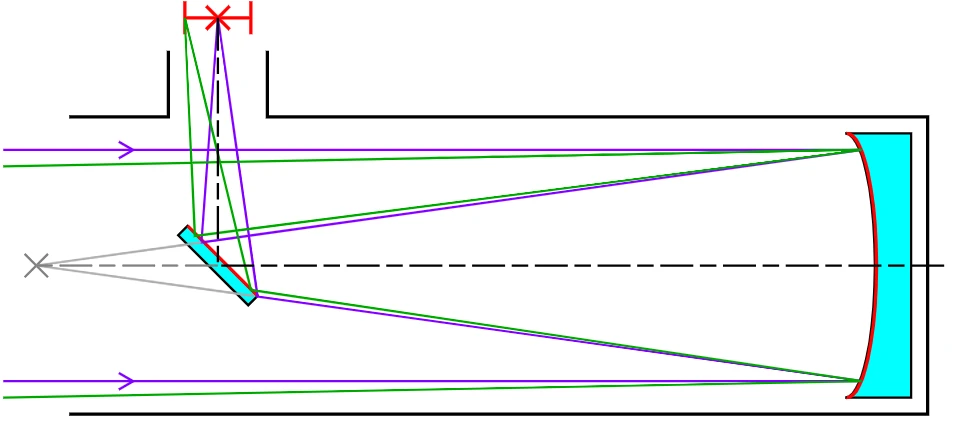
Newton telescope ©Krishnavedala
Related products
OEC