
Watching the atmosphere in real time, while a quantum link runs through it
A HASO Shack-Hartmann wavefront sensor measured turbulence on a free-space quantum channel as it operated — and the data lines up with the quantum bit error rate well enough to explain where the errors come from.
Sensor HASO Shack-Hartmann Field Site Vigo, Spain
With Vigo Quantum Communication Center, UVigo
In free-space quantum communication — the kind being prepared for satellite missions such as Eagle-1 — information is carried by photons rather than strong light pulses, so it matters that as many of them as possible make it through the open atmosphere. That atmosphere is never still. Turbulence scatters light out of the channel and degrades how well the beam couples into the receiver, and the coupling penalty becomes severe when the link feeds a single-mode fiber, as several planned missions require.
The practical problem is that turbulence is invisible to the quantum link itself. When the bit error rate climbs, the operator sees the symptom but not the cause. Was it wind nudging the telescopes out of alignment? A pocket of strong turbulence breaking up the beam? Without an independent measurement of the channel, you are guessing.
Working with the Vigo Quantum Communication Center (UVigo), we put a Shack-Hartmann wavefront sensor (SHWFS) on the receiver to measure the turbulence in the link at the same time as the quantum communication was running. The wavefront data turned out to explain the error spikes directly.
01 | The setup
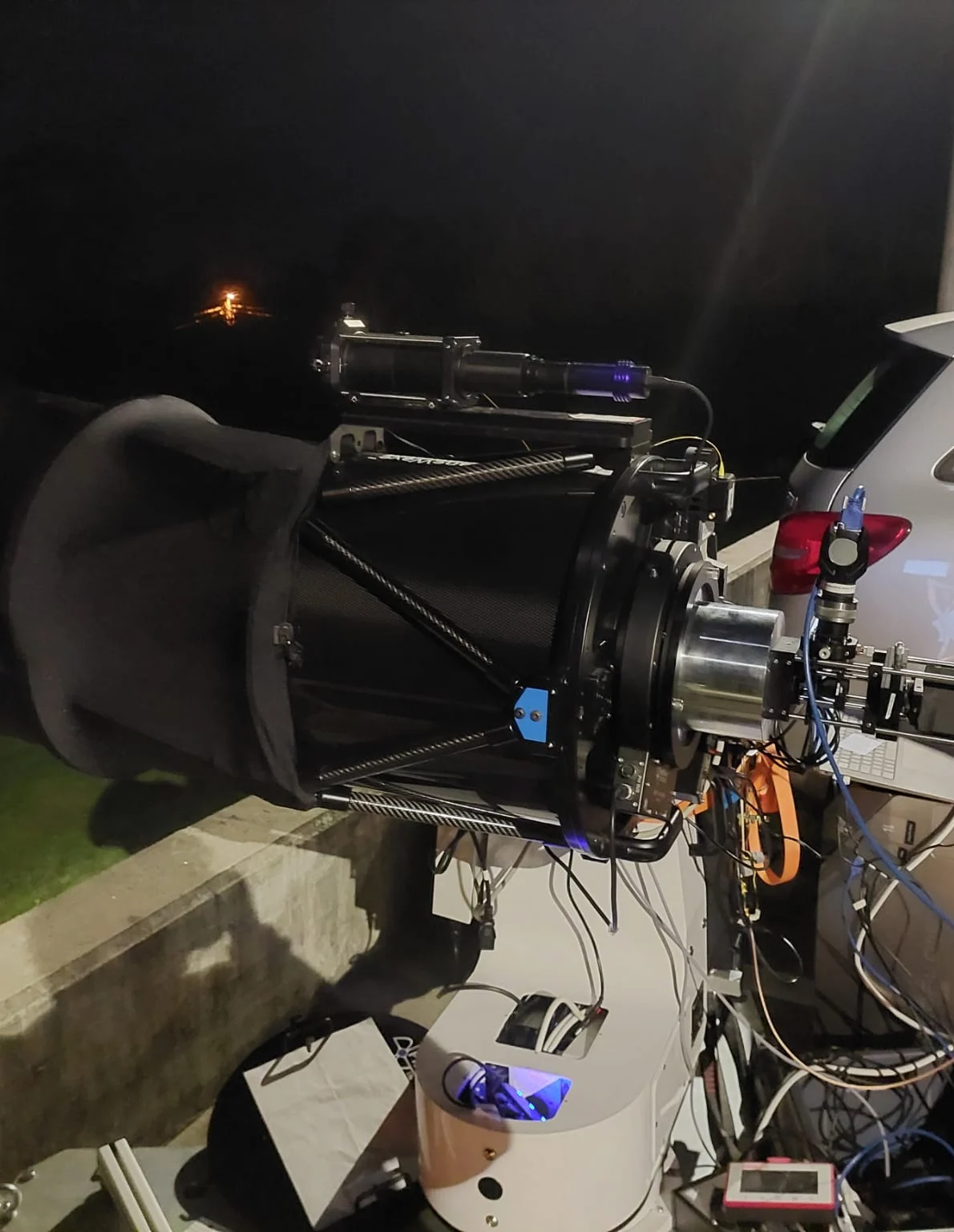
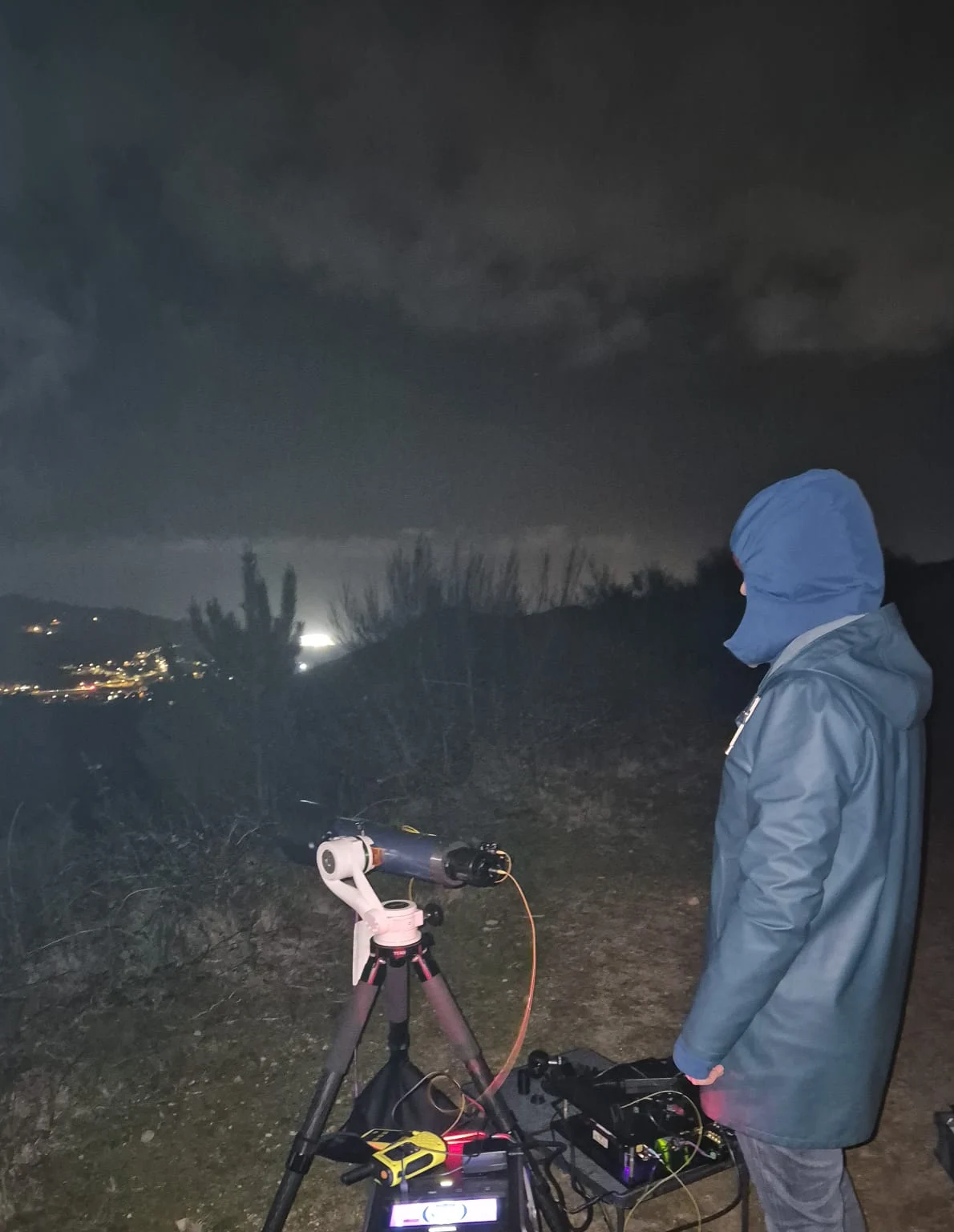
The experiment runs two co-propagating links. The quantum link operates at 850 nm; a parallel classical link at 511 nm travels the same path through the atmosphere. At the receiver, a dichroic splits the two wavelengths and guides the classical beam toward the Shack-Hartmann sensor, which sees the same turbulence the quantum photons just passed through.
02 | What the sensor measures
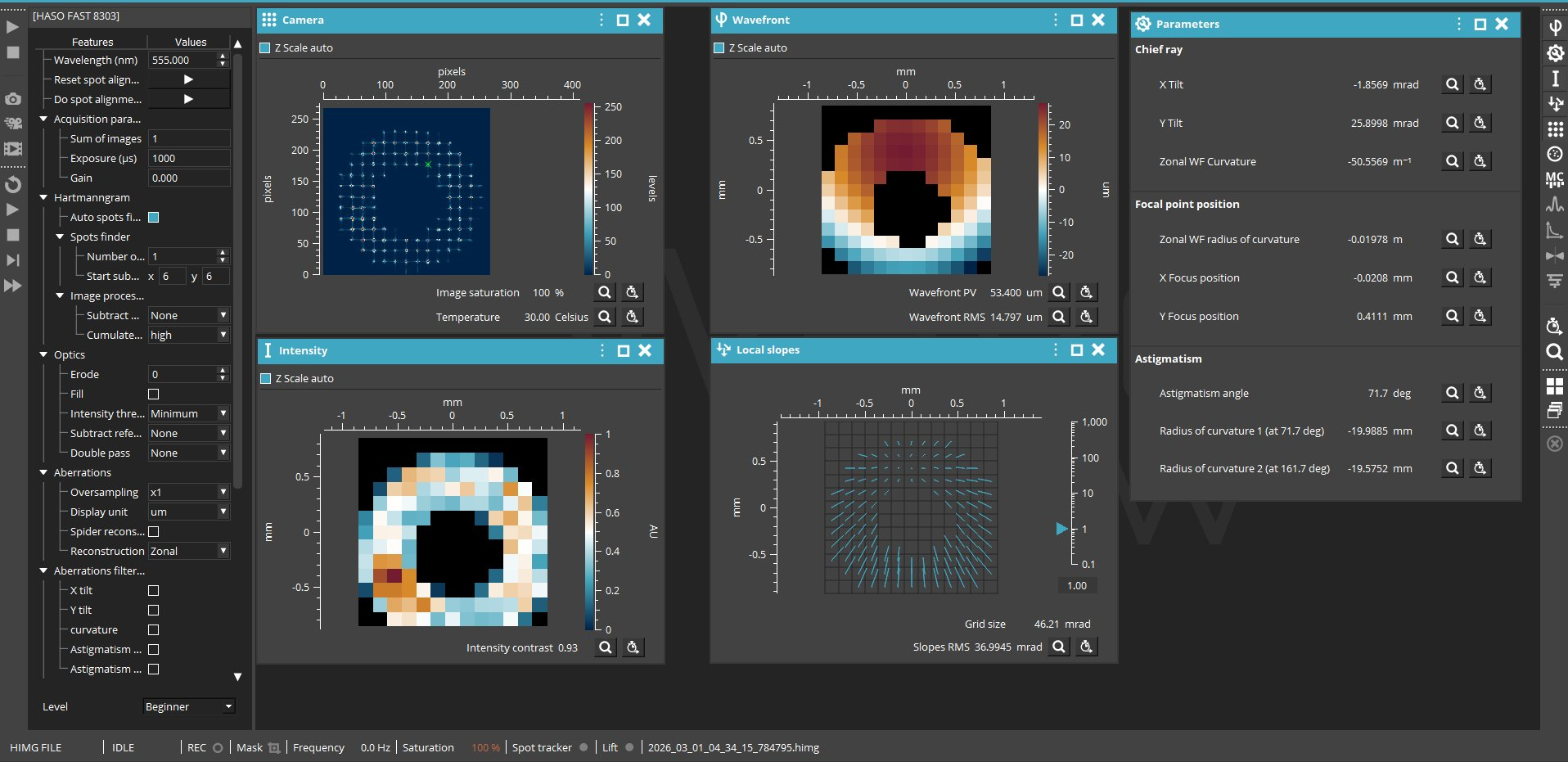
A Shack-Hartmann sensor reconstructs the shape of the incoming wavefront from the displacement of focal spots behind a microlens array. From that wavefront we extract Zernike coefficients — tip, tilt, defocus, astigmatism and higher orders — and from those we compute the Fried parameter (r₀), the standard measure of turbulence strength, once per second.
|
20 HZ
ACQUISITION RATE
|
1 / S
R₀ COMPUTED
|
850 NM
QUANTUM LINK
|
511 NM
CLASSICAL / SENSING
|
Reading the turbulence in frequency space
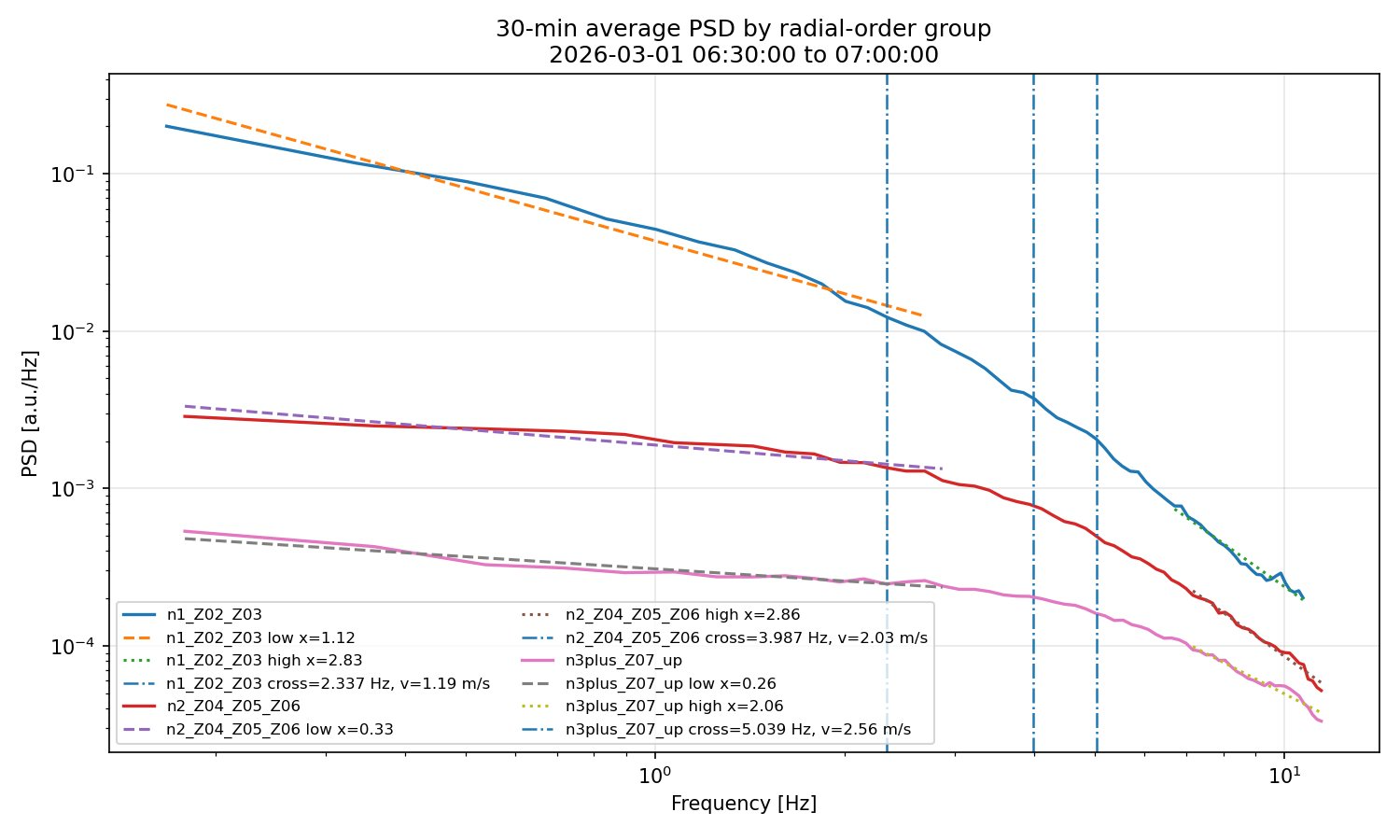
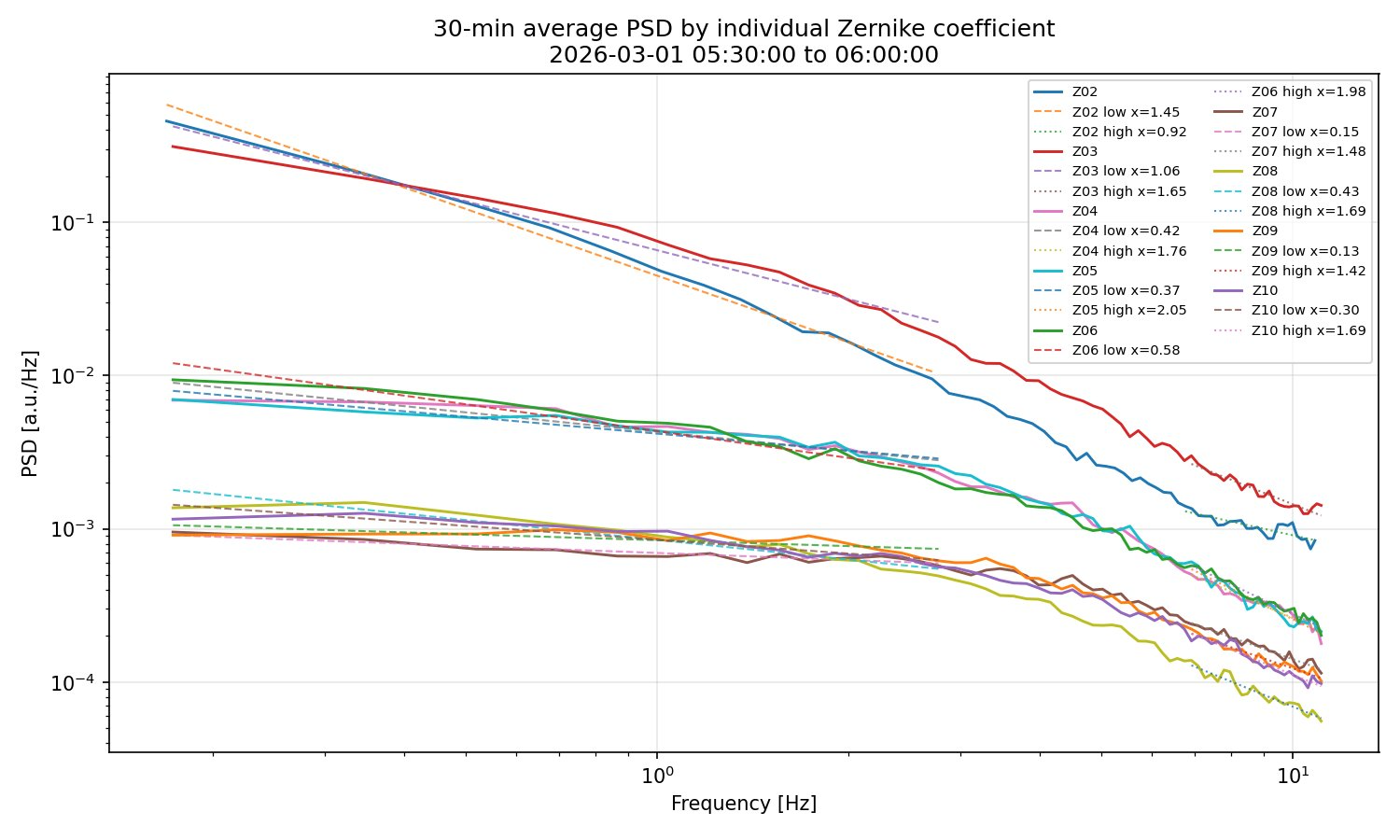
Averaging the Zernike time series into power spectral densities shows how the atmosphere distributes its energy across temporal frequencies. Grouping coefficients by radial order makes the structure clear: low-order modes (tip/tilt) carry the most power, and each group rolls off with a characteristic slope, with a knee frequency that maps to a wind-crossing velocity.
03 | The result: turbulence explains the errors
Running the SHWFS and the quantum receiver together, we monitored the Fried parameter and the quantum bit error rate (QBER) simultaneously. The security argument for the link depends on QBER staying below a threshold; the wavefront data tells us what pushes it over.
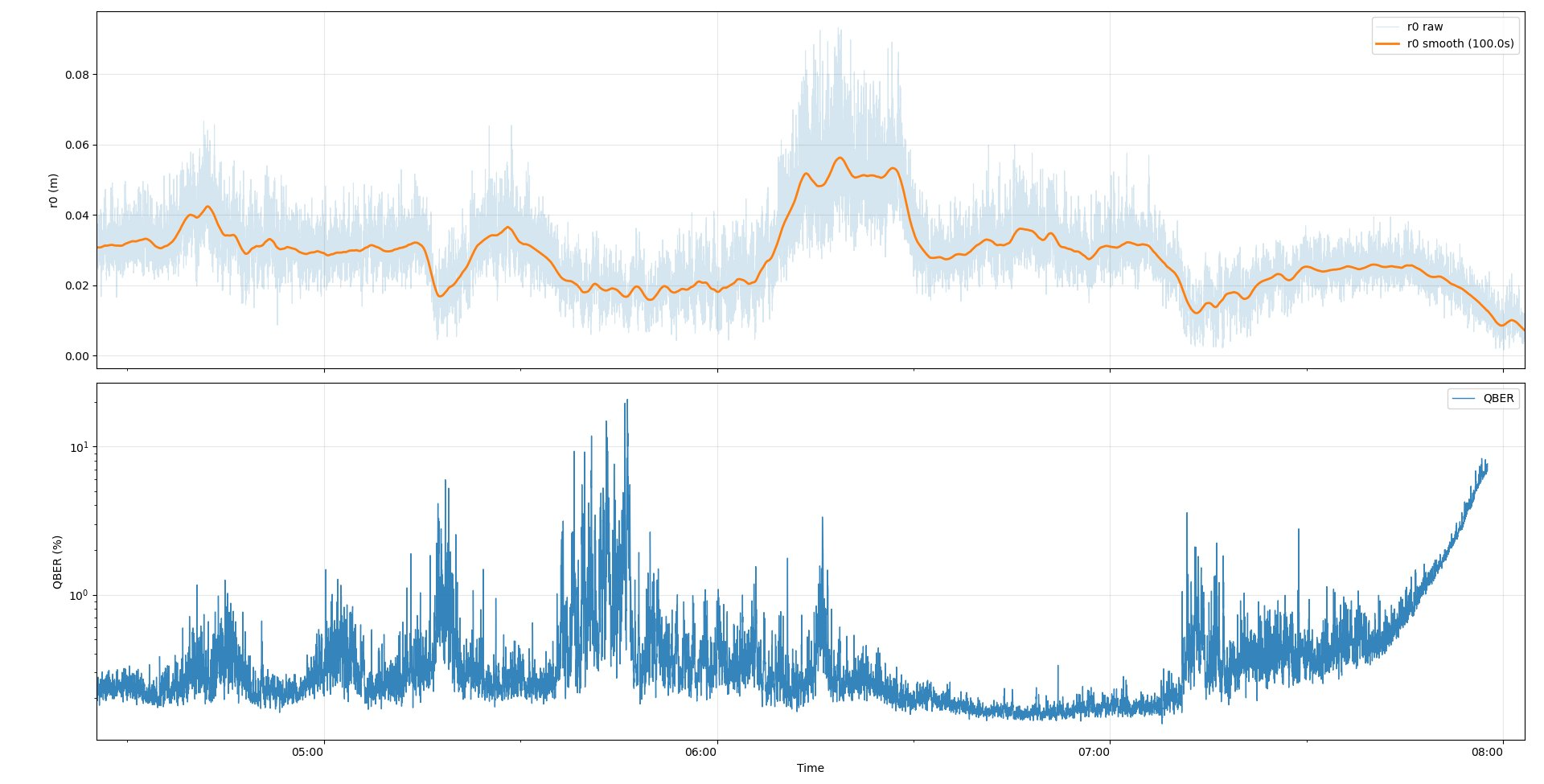
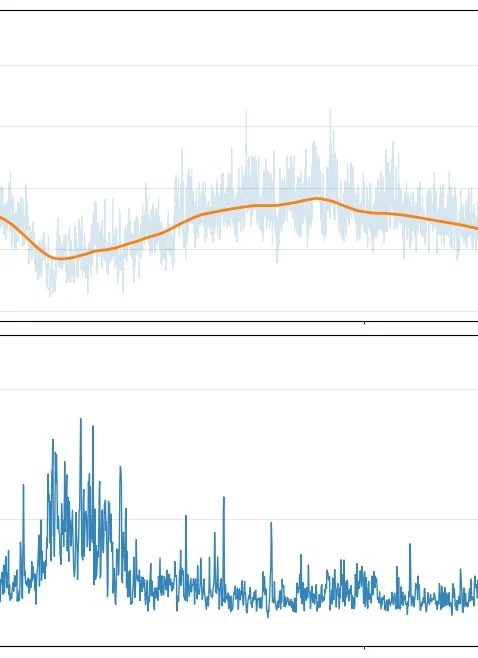
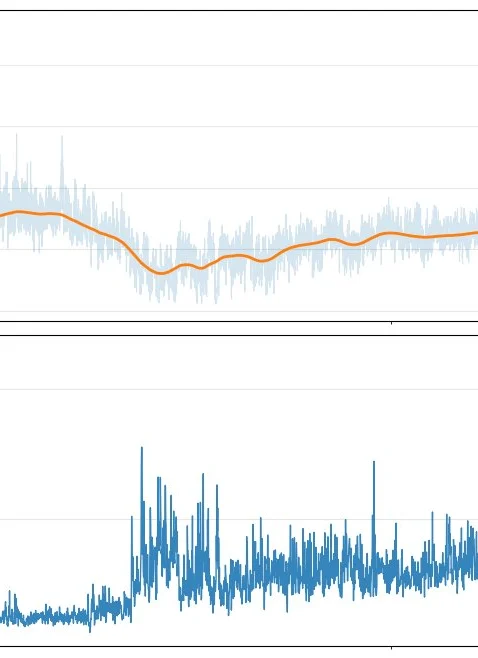
r₀ (top) and QBER (bottom) over a single session. Periods of low, unstable r₀ line up with bursts of elevated QBER; the rise toward the end of the window tracks deteriorating conditions.
- The SHWFS shows the wavefront tip/tilt correlating with QBER spikes — pointing to temporary misalignment of the transmitter and receiver telescopes under wind, rather than anything intrinsic to the quantum hardware
- The correlation between Fried parameter and QBER splits into two clusters, which we read as turbulence occasionally strong enough that the quantum signal no longer fully landed on the detector.
Why it matters
With an independent, real-time picture of the channel, an unexplained error rate becomes a diagnosable one: distinguish a pointing problem from a turbulence problem, and act on the right one.
04 | Where this goes
The same measurement supports three directions the field is moving toward:
during a pass.
- System design. Quantifying how turbulence couples into QBER informs receiver design, including the case for adaptive optics correction ahead of single-mode fiber coupling.
- Certification. A documented turbulence record alongside the QBER gives a basis for certifying free-space quantum links against their security assumptions.
- Real-time operation. Live r₀ and wavefront data turn troubleshooting from after-the-fact analysis into something an operator can act on during a pass.
- A paper describing the campaign in full is in preparation.
05 | The people behind it
|
Guillaume Dovillaire
Wavefront sensing & adaptive optics
IMAGINE OPTIC
|
Hannah Thiel
Senior researcher, Satellite Quantum Hub
VIGO QUANTUM COMMUNICATION CENTER, UVIGO
|
|
Lukas Tiefenthaler
Postdoctoral researcher, Satellite Quantum Hub
VIGO QUANTUM COMMUNICATION CENTER, UVIGO
|
Álvaro Magdalena
PhD student, Satellite Quantum Hub
VIGO QUANTUM COMMUNICATION CENTER, UVIGO
|
|
Pedro Neto Mendes
PhD student & guest researcher
TÉCNICO · ULISBOA
|