Adaptive Optics for Astronomy — Achieve Diffraction-Limited Imaging from the Ground
Home / Markets / Applications / Adaptive Optics for Astronomy
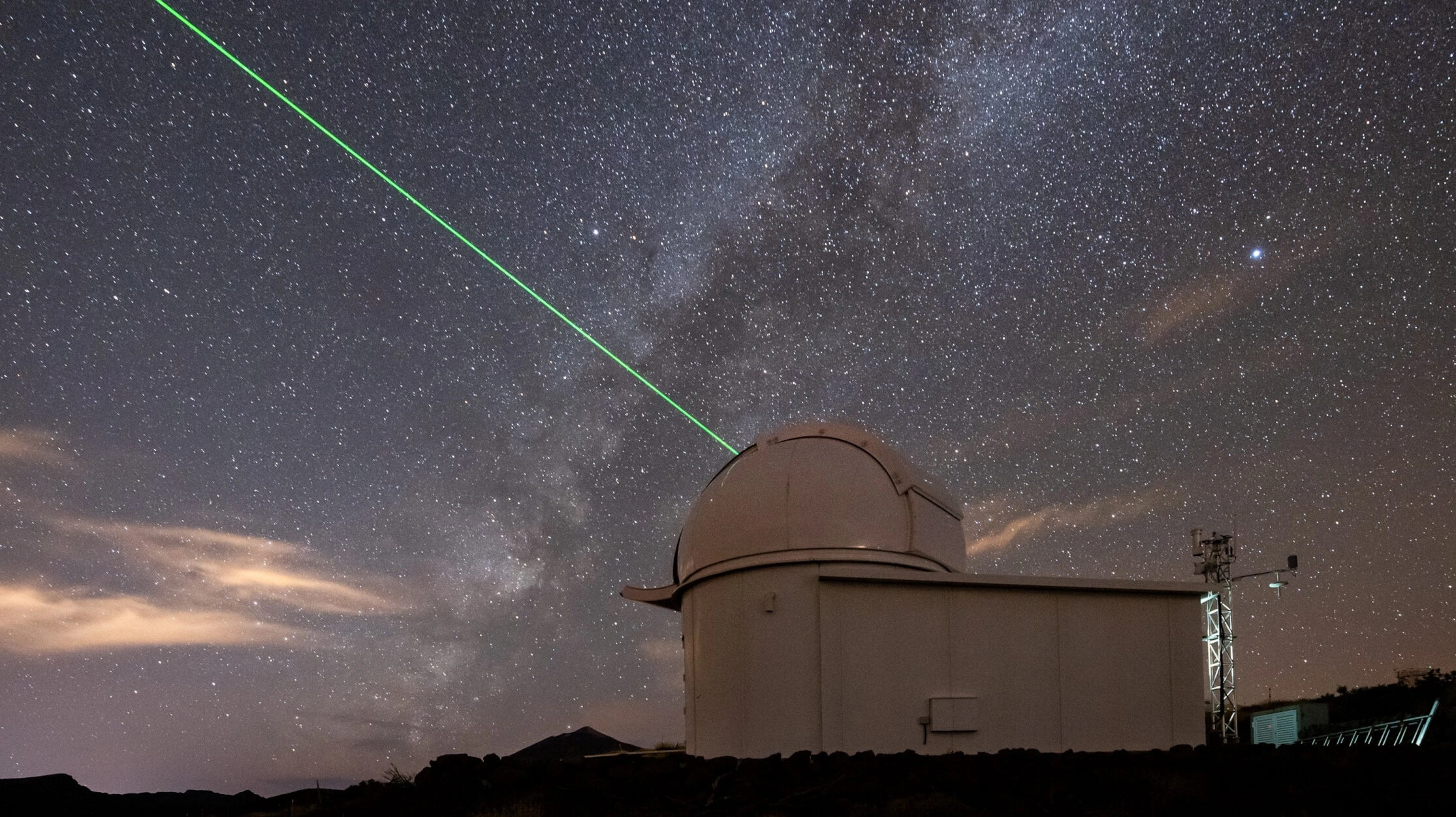
Ground-based telescopes face a fundamental challenge: the atmosphere. Atmospheric turbulence, mirror misalignment, thermal drift, and gravity-induced deformations continuously degrade image resolution, reducing what should be crisp, diffraction-limited astronomical imaging to a blurred, unstable picture.
Adaptive optics (AO) for astronomy is the technology that corrects these effects in real time — restoring the full resolving power of your telescope, whether you are imaging planets, resolving binary stars, characterising stellar diameters (only possible for at most 1-meter class telescopes), or feeding light into a single-mode fiber for spectroscopy or interferometry.
At Imagine Optic, we design compact, high-performance AO systems for astronomy that integrate directly into existing telescopes — no modification of the optical path required
Why Atmospheric Turbulence Is the Biggest Obstacle in Ground-Based Astronomy
When starlight travels through Earth’s atmosphere, temperature gradients create pockets of air with varying refractive indices. These fluctuations — quantified by the Fried parameter r₀ — continuously distort the incoming wavefront. When the telescope aperture exceeds r₀, the image blurs dramatically, image contrast collapses, and fringe visibility in interferometric measurements is severely degraded.
In addition to atmospheric turbulence, static telescope optical aberrations accumulate from mirror misalignment, gravity load deformation, and thermal expansion — further reducing image quality during long observation sessions.
Directly linked to the Fried parameters, astronomers use the seeing defined as the best angular resolution you can expect in a given atmospheric turbulence situation. A medium seeing is around 2 arcsec.
Without correction, even a 500 mm telescope loses most of its theoretical resolving power under typical seeing conditions.
Adaptive optics corrects both effects simultaneously — measuring wavefront distortions at up to 1 kHz and applying real-time corrections through a deformable mirror, restoring the telescope to near-diffraction-limited performance.
Applications of CIAO VIS for Diffraction-Limited Astronomy
High-Resolution Planetary and Solar Imaging
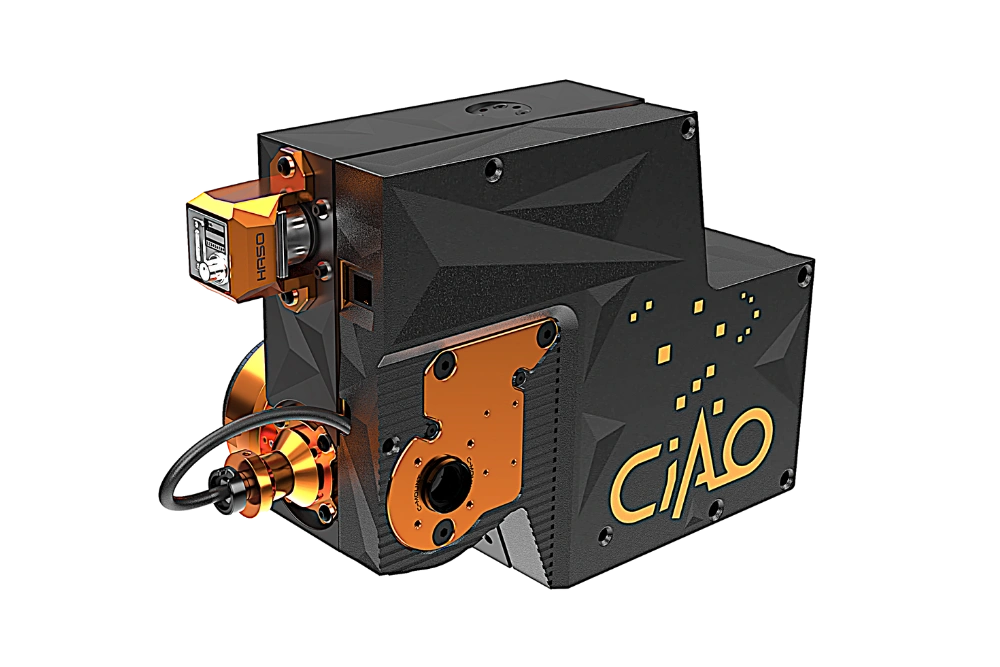
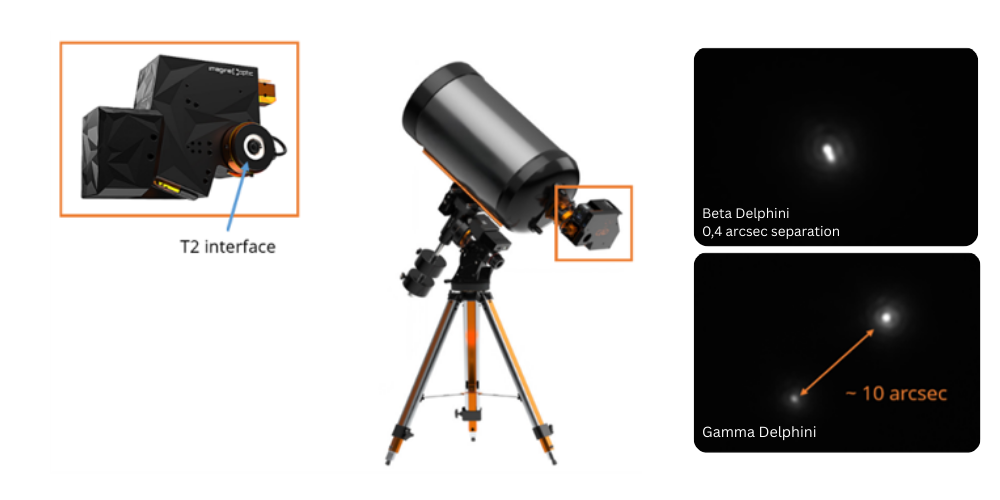 Lightweight, compact, and highly efficient, the CIAO VIS system is designed for both advanced amateur astronomers and researchers who need real-time adaptive optics correction to achieve diffraction-limited astronomy imaging. Compatible with telescopes ranging from 200 mm to 1 m, its direct eyepiece-style interface makes integration straightforward, whether on a personal observatory setup or a scientific test bench.
With its 1 kHz correction frequency, CIAO VIS corrects atmospheric turbulence in real time, significantly improving image sharpness. This enables high-contrast planetary imaging, the resolution of close binary stars down to 1 arcsecond, and more stable long-exposure observations — beneficial for both astrophotography enthusiasts and scientific imaging projects.
The system comes with its dedicated AO telescope alignment and control software WaveSky, offering full access to adaptive optics parameters such as loop gain, number of controlled modes, and internal deformable-mirror calibration. WaveSky provides the flexibility needed for research-grade experiments while remaining intuitive enough for experienced amateurs seeking to push their imaging capabilities further.
CIAO VIS is the ideal companion for anyone who wants to overcome atmospheric limitations — whether for stunning astrophotography or precise scientific measurements.
AO for Science — Stellar Interferometry and Spectrometry
In astrophysical research, high-resolution imaging is essential to analyse and interpret complex celestial objects and events. To probe the Universe at its smallest scales, researchers employ advanced techniques such as stellar interferometry and spectrometry — both of which benefit directly from adaptive optics for large telescope imaging.
Stellar Interferometry — Restore Fringe Visibility with AO
Stellar interferometry utilises multiple telescope apertures working together to synthesise a much larger “virtual” telescope.
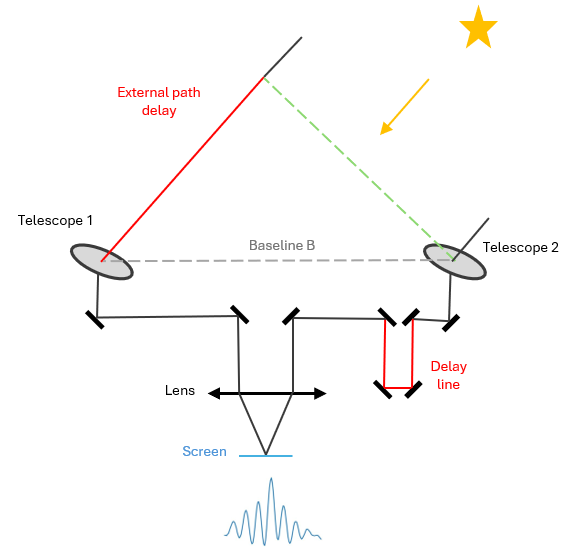 This configuration allows researchers to:
- Measure the precise diameters and shapes of stars
- Track stellar motions and positions with micro-arcsecond accuracy
- Characterise multiple stellar systems and exoplanetary environments
Despite its power, the performance of an interferometer is severely degraded by atmospheric turbulence. These fluctuations cause random phase shifts across the incoming wavefront, reducing fringe visibility (or contrast) in long-exposure images. This degradation is quantified by the Fried parameter r₀, which represents the spatial coherence length of the atmosphere. When the telescope aperture is larger than r₀, the interference fringes “wash out,” drastically limiting the sensitivity and the limiting magnitude of the instrument.
To counteract these effects, CIAO VIS can be integrated into the interferometric chain. By measuring and correcting wavefront distortions in real time, CIAO restores the phase coherence of the light beams before they are combined. This process ensures stable, high-contrast fringes and allows the light to be efficiently coupled into single-mode fibers — improving telescope coupling efficiency for the entire interferometric system.
AO for Spectrometry — Compact, Stable, High-Performance Spectrographs
Traditionally, ground-based spectrographs are seeing-limited. Atmospheric turbulence blurs starlight into a “blob” typically one arcsecond wide. To capture all this light, the instrument’s entrance slit or fiber must be relatively large — which forces the entire spectrograph, with its mirrors, gratings, and cameras, to be scaled up. This results in massive, room-sized instruments that are incredibly expensive to build and difficult to stabilise.
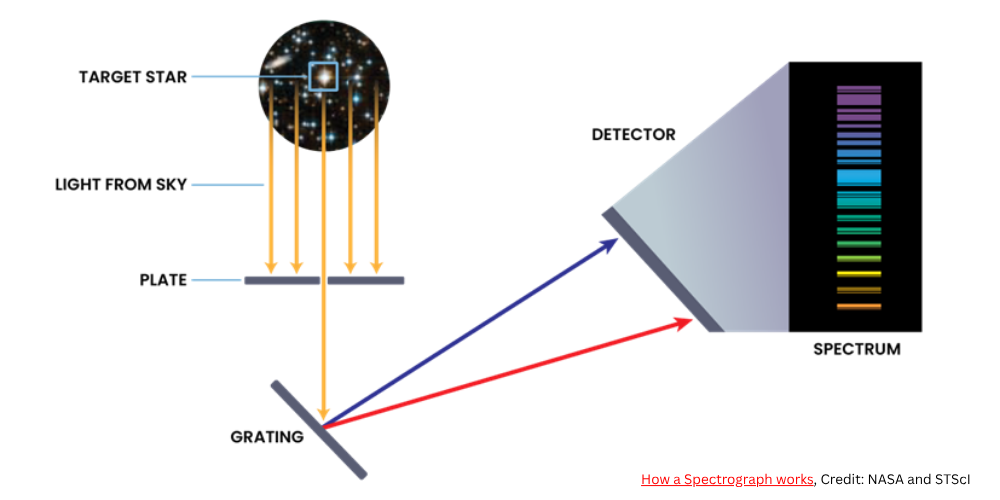 By integrating CIAO VIS for telescope AO, we correct atmospheric disturbances in real time. This allows us to:
- Reduce the beam diameter to optimise throughput — AO concentrates the light into an optical étendue much smaller than natural seeing, maximising the encircled energy in a small slit or fiber
- Compact the instrument while maintaining performance — because the entrance is smaller, the entire spectrograph can be scaled down
One key goal of these compact instruments is to measure Radial Velocity (RV) — the slight “wobble” in a star caused by the gravitational pull of an orbiting planet. To detect an Earth-like planet, RV variations as small as centimetres per second must be measured, requiring extreme thermo-mechanical stability. A smaller, AO-fed spectrograph is far easier to vacuum-seal and thermally stabilise than a massive conventional one.
Thus, integrating CIAO VIS allows researchers to build compact, more stable, and more cost-effective spectrographs — a direct enabler of next-generation exoplanet science.
CIAO VIS in the Lab — Testing and Validation
We test the capabilities of our adaptive optics for astronomy systems both in-house, in our laboratory, and on demonstration benches that we showcase at events to illustrate their performance.
Laboratory Bench
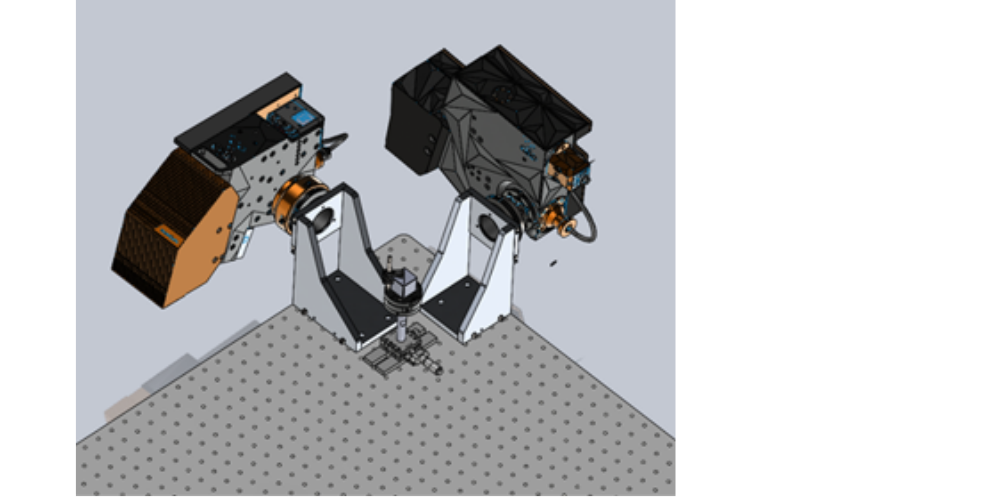 The bench currently used in the lab allows us to validate two CIAO units simultaneously by splitting the light into two paths with a beam splitter. In practice, we use a 1064 nm fiber laser source so that both the VIS and SWIR versions can be tested. The beam is first collimated with a lens and then focused onto each CIAO focal plane with a second lens. An iris placed between the two lenses is used to adjust the aperture and assist with optical alignment. To generate atmospheric turbulence for testing, we use a heating element positioned between the two lenses, just after the iris. The temperature can be varied up to 200 °C.
VIS Demonstration Bench
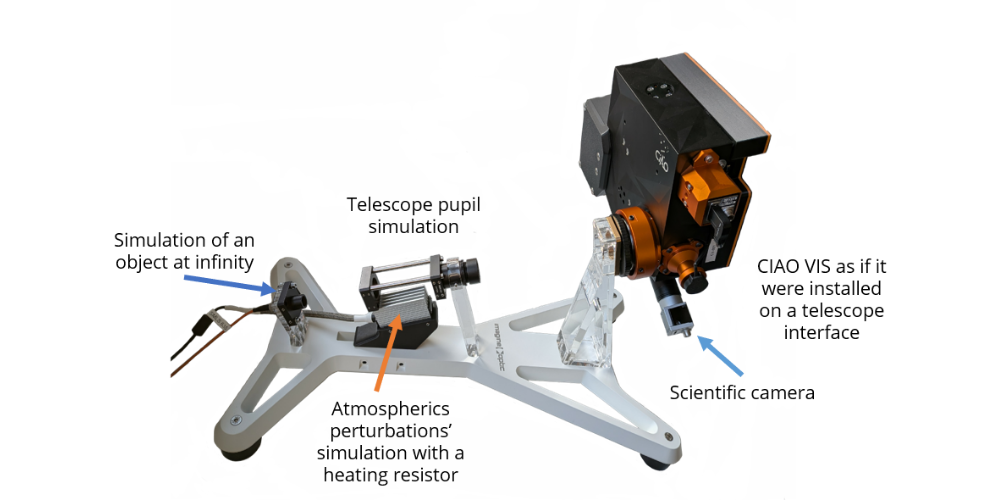
We have also developed a compact demonstration bench dedicated to showcasing the performance of the VIS version. Following the same principles as the laboratory bench, it uses a 635 nm fiber laser and two achromatic doublets to focus the beam at the CIAO focal plane. To simulate the telescope pupil, an iris is positioned as if the source were at infinity, and a central obstruction is added.
As with the laboratory bench, turbulence is simulated using a heating resistor operated at a constant temperature. The demonstration bench is portable and convenient for trade shows and on-site presentations.
This demonstration bench is an ideal tool to teach adaptive optics to students. Concepts like Fried diameter, seeing, Strehl ratio, enclosed energy, closed-loop parameters, and pupil imaging can be easily explained through the WaveSky interface and scientific camera software.
Dedicated Software
WAVESKY — Learn more
Wavesky is a TCP-IP communication based software between a server and one (or more) clients.
Allows to connect multiple clients to one server but also to launch multiple servers (CIAO VIS) on one computer and to command them via one or multiple client
Server answers to requests listed, allowing either the use of the Wavesky client or to use any other desired client (like telnet) to establish a connection and send the requests.
There is also the possibility to dump (images and slopes) to record the measurement you are experiencing.
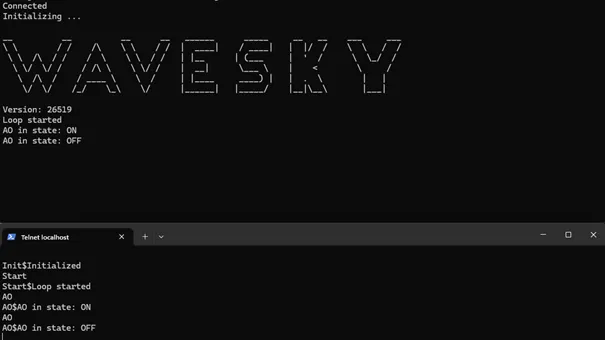
Figure 1: Server top, client bottom. Request are sent (ex : AO, Start) and the server answers by rewriting the request, adds a “$” and provides the server answer (ex : AO in state: ON, Loop Started)
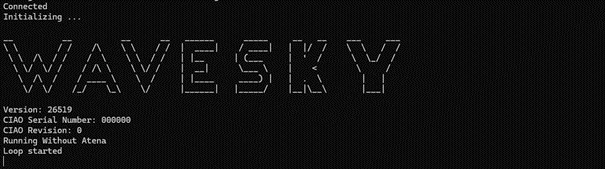
Figure 2: Server window after CIAO initialized and acquisiition is ON
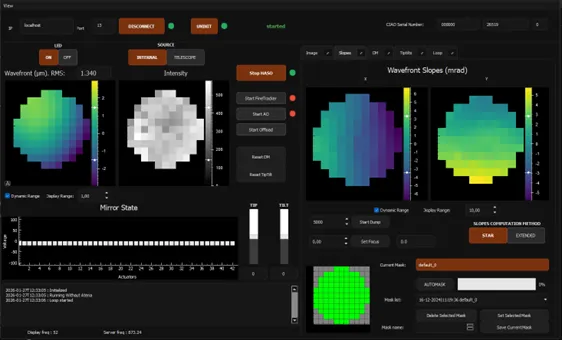
Figure 3: Wavesky Client displaying the Slopes tab with AO OF
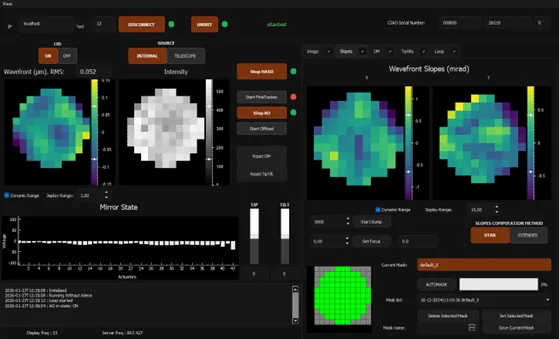
Figure 4: Wavesky Client displaying the Slopes tab with AO ON
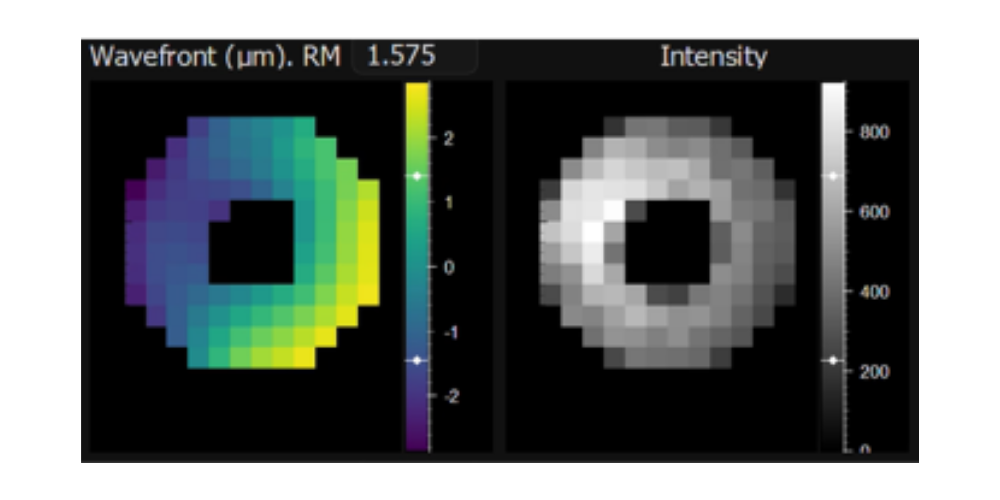
The server regularly diagnoses several quantities and store them so the client can get access to them and display them if needed (wavefront, slopes, intensity, tensions applied to the deformable mirrors etc)
The server is multithreaded so while a loop is ON (acquisition) you can act on the loop in the same time to correct, adjust, activate or change states as you wish.
For example : switch masks during acquisition, correct using the AO, change the interaction matrix, apply Zernike commands …
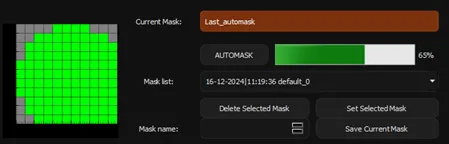
Figure 5: Mask section with a new mask being computed automatically
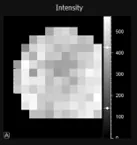
Figure 6: Intensity display with the new mask applied
Possibility to automatically calculate a mask size and shape and then apply it to the measurements
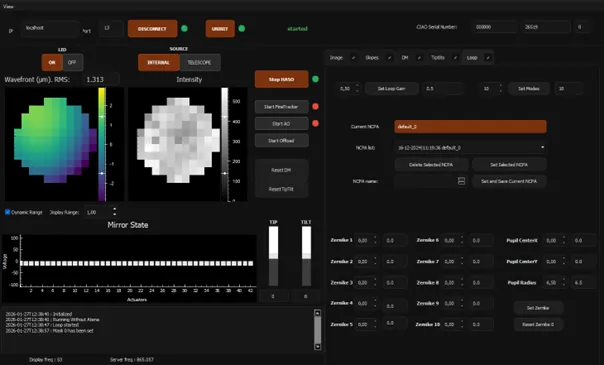
You can direct CIAO using Zernike commands
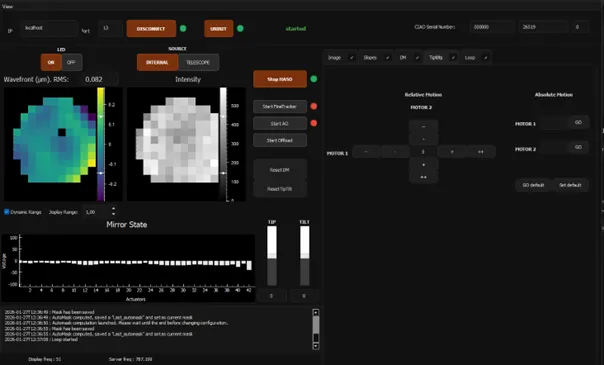
With Atena motherboard, you can pilot 3 motors:
- the injection motor allowing you to switch between the internal source (LED) and the external source.
- Two motors used to change the tilt (X and Y) on the deformable mirror. You can move them relative to their current position or use absolute movement to quickly move them at a preferred position.
It allows you 2 additional driving option :
- Offload
- Finetracking
How CIAO VIS Corrects Telescope Optical Aberrations — The AO Loop
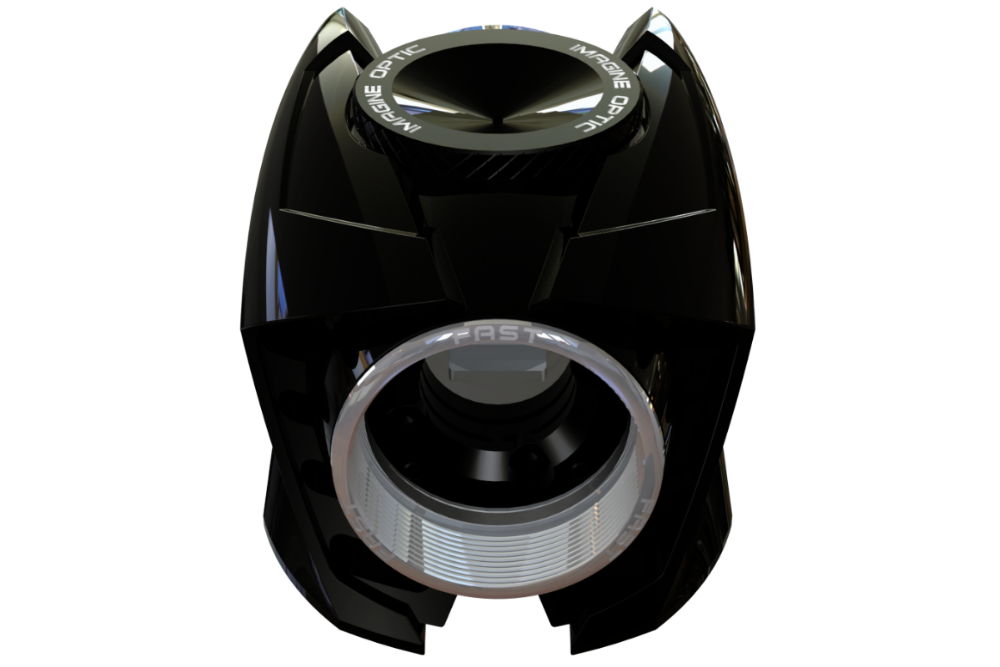
- Wavefront sensing — a fast Shack-Hartmann wavefront sensor measures incoming wavefront distortions from both atmospheric turbulence and static telescope optical aberrations at up to 1 kHz
- Wavefront computation — the WaveSky software computes the optimal deformable mirror command to cancel the measured aberrations
- Wavefront correction — the deformable mirror applies the correction, restoring the wavefront to near-flat — and near-diffraction-limited image quality — before it reaches the detector or fiber
This loop runs continuously and automatically, adapting in real time to changing atmospheric conditions and telescope orientation.
Frequently Asked Questions — Adaptive Optics for Astronomy
What telescope sizes and focal ratios are compatible with CIAO, and can it be customized for specific models like the CDK550?
CIAO is optimized for telescopes with apertures ranging from 200 mm to 1 m. Whether you choose to upgrade slightly to a 17″ or move to a larger 20″ or 24″ system, the CIAO platform will perform effectively across these diameters.
Regarding focal ratios, while the standard configuration is set for f/8, specific ratios such as the f/7.77 found on the CDK550 are fully supported. To ensure zero performance degradation and a perfect optical match, we can provide a custom adapter. This allows CIAO to operate exactly at your telescope’s native focal ratio.
Can CIAO use laser guide stars for correction?
CIAO can use laser guide stars (LGS) for correction but does not generate one. The correction is efficient only over a limited portion of the atmosphere, defined by the anisoplanatic angle, typically on the order of 10 arcseconds. Therefore, the LGS should be positioned within this range of the target, but not too close to avoid contamination.
What is the maximum field of view (FOV) for observing extended objects such as Jupiter?
The field of view is determined by the telescope and the detector (camera); CIAO does not modify it. However, only the central region—typically within 10 to 20 arcseconds depending on observing conditions—is fully corrected. Beyond this area, the correction gradually decreases.
Can we correct the wavefront in the case of deep-sky imaging?
CIAO can correct celestial objects up to approximately magnitude 5 when the light is concentrated into a point source. For extended objects such as nebulae, galaxies, or clusters, the luminosity is distributed over a larger surface, resulting in insufficient photon flux per unit area for effective correction. However, CIAO is highly effective for planetary, lunar, and solar imaging.
Does CIAO VIS require modification of the telescope optical path?
No. CIAO VIS is inserted between the telescope focal plane and the user instrument without modifying the optical path. Alignment is facilitated by the embedded tip-tilt interface and auto-calibration tools.
Can CIAO VIS improve telescope coupling efficiency into single-mode fibers?
Yes. By correcting atmospheric turbulence and static telescope optical aberrations, CIAO VIS reduces the beam diameter and maximizes coupling efficiency into single-mode fibers for spectroscopy, interferometry, or quantum applications.
What atmospheric conditions does CIAO VIS operate in?
CIAO VIS is designed for typical astronomical seeing conditions. The 1 kHz correction frequency covers the full range of turbulence encountered at most observatory sites.
Is CIAO VIS suitable for amateur astronomers?
Yes. CIAO VIS is designed to be accessible to advanced amateur astronomers as well as professional research teams. A dedicated version for personal observatory use is available —
discover it here.
Blog Posts / Application Notes
Related Market

Observation & Space situational awareness